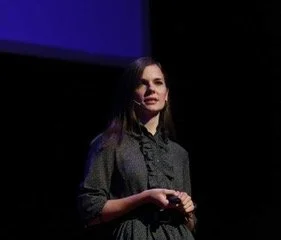
The Feminist Book Club, powered by LSTS and Privacy Salon, reflects a clear commitment to gender justice. The term “feminist” signals that this initiative goes beyond reading about gender: it actively engages with questions of power, equity, and justice, and with feminist movements and affected communities.
The Feminist Book Club (3rd Edition)
19-22 May at CPDP2026
The books:

Insufferable Tools Feminism Against Big Tech by Sarah Sharma
-
In a world seemingly run by the whims and power plays of Musks and Zucks, Insufferable Tools cuts to the core of modern technology’s gendered politics. Sarah Sharma challenges the idea that the Big Tech broligarchs are neutral utilitarians who view technology as mere tools. She shows instead how these tech giants have turned the internet, and, increasingly, “real life” into a set of environments which they cultivate and manipulate to wield the real tools: us, the users. Sharma critiques a popular system of inclusion she calls “Big Tech Feminism” that attempts to incorporate and make useful people of color, queer people, and others who are seen as broken machines in the current gendered power structures. Deconstructing Big Tech’s patriarchal deployment of media theory to gain and maintain power, Sharma proposes a feminist techno-politics that can forge new futures free from the grip of the truly insufferable tools.
-
-
Recording Coming Soon
Discussants: Sarah Sharma, Anastasia Karagianni & Demetra Tzanaki

The Dark Side of Academia
Competition, Inequality, and Violence in the Ivory Tower by Gayle Brewer
-
This book is introduced not as a final answer, but as a reflection on issues that are often left unspoken. It is not based on any single case, but on a broader awareness that such experiences are widely recognised across academic environments. It grows out of repeated moments in academic settings where conversations about gender-based violence are followed more quietly by people sharing that these situations are common in their own institutions, even if they are rarely discussed openly.
At the same time, increasing pressures around funding, geopolitical tensions, and concerns about academic freedom raise an important question: how freely can people really speak about these issues? There often seems to be a kind of “cloak” of privacy, where individuals manage difficult experiences without feeling able to voice them publicly. This does not affect everyone in the same way. For those in marginalised groups, such as LGBTQIA+ people or researchers whose perspectives may not align with dominant political views, the risks of speaking out can be even greater. In this way, the session looks at how power works within academia, and also draws a parallel with similar imbalances in big tech companies, where the rights and conditions of data workers are shaped by who gets to speak and be heard. Rather than offering clear solutions, it invites participants to reflect on what is shared, what is held back, and why.
-
-
Recording Coming Soon
Discussants: Gayle Brewer, Anastasia Karagianni, Sreyan Chatterjee, Salomé Lannier & Pia Groenewolt
The Feminist Book Club (2nd Edition)
21-23 May at CPDP2025
Launched in 2024 and continued into 2025, this book club fosters discussions on pressing feminist and technological issues. In its second edition, the focus included topics such as AI in war crimes from a feminist perspective on the genocide in Gaza, gynecological cancer detection through AI, and AI in border management control.
The books:

Artificial Intelligence for Early Detection and Diagnosis of Cervical Cancer by Sejal Shah, Rohit M. Thanki, Anjali Diwan
-
This book introduces the revolutionary use of AI in the field of cervical cancer detection. The book explores how advanced computer algorithms can analyse medical images and patient data to enhance early detection and accurate diagnosis of cervical cancer. The book starts by providing a comprehensive overview of cervical cancer, its risk factors, and the importance of early detection. It then delves into the fundamental concepts of artificial intelligence and its application in healthcare. Readers will gain a deeper understanding of how AI algorithms can "see" patterns in cervical cells and tissue, enabling the detection of abnormal cells and precancerous changes that may indicate the presence of cervical cancer. Drawing on the latest research and real-world case studies, the book showcases the various AI techniques used for cervical cancer screening, including the analysis of Pap smear and liquid-based cytology images.
-
-
Discussants: Sejal Shah, Clarisa Sánchez Gutiérrez

Migrants in the Digital Periphery- New Urban Frontiers of Control by Matt Mahmoudi
-
As the fortification of Europe's borders and its hostile immigration terrain has taken shape, so too have the biometric and digital surveillance industries. And when US Immigration Customs Enforcement aggressively reinforced its program of raids, detention, and family separation, it was powered by Silicon Valley corporations. In cities of refuge, where communities on the move once lived in anonymity and proximity to familial and diaspora networks, the possibility for escape is diminishing. As cities rely increasingly on tech companies to develop digital urban infrastructures for accessing information, identification, services, and socioeconomic life at large, they also invite the border to encroach further on migrant communities, networks, and bodies. In this book, Matt Mahmoudi unveils how the unsettling convergence of Silicon Valley logics, austere and xenophobic migration management practices, and racial capitalism has allowed tech companies to close in on the final frontiers of fugitivity—and suggests how we might counteract their machines through our own refusal.
-
-
Discussants: Matt Mahmoudi, Petra Molnar, Alessandra Calvi, Laurence Meyer

AI, Sacred Violence, and War—The Case of Gaza by Chris Hables Gray
-
This open access book is about how Israel is using Algorithmic Intelligence (AI) and other computer technology in military operations in the Gaza Strip to achieve goals based on ancient religious entitlements. Changes in Israel Defense Force (IDF) ethical codes and innovation policies have not led to victory, but have resulted in a wide range of War Crimes and Crimes Against Humanity in a strategy focused on The Torture of Gaza, which includes ethnic cleansing and is approaching genocide. It covers the history of using AI in war, and current U.S. and Israeli military AI technologies such as Maven, Iron Dome, Pegasus, the Alchemist, Gospel, Lavender, and Where’s Daddy, all tested and perfected in the Palestinian Laboratory and marketed as such. This book also places the current data-driven and AI-directed assault on Palestine in the context of Postmodern War, which precludes military victories and enshrines the profits and power of the U.S.-Israeli military-industrial complex in a system of perpetual war and militarized technological innovation. Through an analysis of Israeli military policies, AI, sacred texts, and the basic tenets of postmodern war, the book ultimately reveals the limits of the IDF’s embrace of illusions about new technologies producing actual victory. War today is about winning hearts and minds, not body counts. As fundamentalist politics achieve more and more power around the world in the context of new information technologies, there is growing danger to the future of all of us.
-
-
Discussants: Chris Hables Gray, Taylor Mathlouthi
The Feminist Book Club (1st Edition)
22-24 May at CPDP2024
“The motivation behind the feminist book club is the initiative I started within my research group (LSTS VUB), a reading group called "Gender, Law and Technology". I started this initiative because I realised my need to gain more academic knowledge about the implications of digital technologies on feminist issues. And of course, the university, as an academic environment is the best place to interact with other researchers from different disciplines. We have access to books, to literature and I wanted to create this time and space to interact with other people so that we can interchange our views and ideas on some topics. Apart from fostering interdisciplinary collaboration- that I really love- my goal is to raise awareness on feminist issues in academia. If you think about it, the university is a thumbnail of the society. So somehow gender stereotypes might be replicated in the university.
I’ve chosen these three books because they are newly released. For instance, the “Feminist Cyber Law” will be published in June. All of them are quite fresh, let’s say. They provide a fresh view of what is happening right now in the digital field, but from a feminist perspective.”
- Anastasia Karagianni
“I am no longer accepting the things I cannot change. I am changing the things I cannot accept.”
- Angela Davis
The books:

When Rape Goes Viral: Youth and Sexual Assault in the Digital Age by Anna Gjika
-
Stories of teen sexting scandals, cyberbullying, and image-based sexual abuse have become commonplace fixtures of the digital age, with many adults struggling to identify ways to monitor young people's digital engagement. In When Rape Goes Viral, Anna Gjika argues that rather than focusing on surveillance, we should examine such incidents for what they tell us about youth peer cultures and the gender norms and sexual ethics governing their interactions. Drawing from interviews with teens and high-profile cases of mediated juvenile sexual assault, Gjika exposes the deeply unequal and heteronormative power dynamics informing teens' intimate relationships and online practices, and she critically interrogates the role of digital cultures and broader social values in sanctioning abuse. The book also explores the consequences of social media and digital evidence for young victim-survivors and perpetrators of sexual assault, detailing the paradoxical capacities of technology for social and legal responses to gender-based violence.
-
-
Discussants: Elisabetta Biasin, Karolina Iwanska

Feminist Cyberlaw by Amanda Levendowski
-
This vibrant and visionary reimagining of the field of cyberlaw through a feminist lens brings together emerging and established scholars and practitioners to explore how gender, race, sexuality, disability, class, and the intersections of these identities affect cyberspace and the laws that govern it. It promises to build a movement of scholars whose work charts a near future where cyberlaw is informed by feminism.
-
A free ebook version of this title is available through Luminos, University of California Press's Open Access publishing program. Visit www.luminosoa.org to learn more.
-
Discussants: Anastasia Nefeli Vidaki, Plixavra Vogiatzoglou, Alexandros Goniadis

Feminist AI by Kerry McInerney
-
Feminist AI showcases the vital contributions of feminist scholarship to thinking about AI, data, and intelligent machines as well as laying the groundwork for future feminist scholarship on AI. It brings together scholars from a variety of disciplinary backgrounds, from computer science, software engineering, and medical sciences to political theory, anthropology, and literature. It provides an entry point for scholars of AI, science and technology into the diversity of feminist approaches to AI, and creates a rich dialogue between scholars and practitioners of AI to examine the powerful congruences and generative tensions between different feminist approaches to new and emerging technologies. It features original and essential works specially selected to span multiple generations of practitioners and scholars.
-
-
Discussants: Luca Stevenson, Andriana Efthymiadou, Mireia Orra De Salsas
Get in contact for the next edition
-
![]()
Anastasia Karagianni
Ph.D Researcher, Co-Founder of DATAWO, Certified Lawyer
-
![]()
Interview with Anastasia
About the first edition of the Feminist Book Club and a sneak peek ino the books
-
![]()
Article
We give mor insight into the books and why Anastasia chose then